

Gas Furnaces
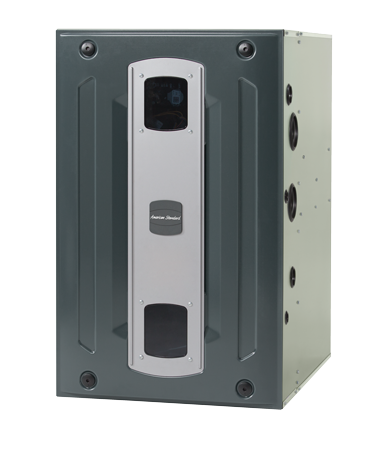
What Is a Gas Furnace and How Does It Work?
A gas furnace is the heating powerhouse of a traditional central heating and cooling system. Unlike a heat pump, which moves existing heat from the outdoor air into your home, a gas furnace burns fuel (natural gas or propane) to create heat, then pushes that warm air through your home.
When your thermostat calls for heat, three things happen inside the furnace:
What Is AFUE and Why Does It Matter?
Just like a vehicle uses MPG to measure fuel efficiency, a gas furnace uses AFUE (Annual Fuel Utilization Efficiency). This percentage tells you how much of the gas you buy turns into usable heat for your home versus how much is wasted as exhaust.
Furnace efficiency has come a long way. Many furnaces from 1990 or earlier run at 65% AFUE or less, so replacing an old, low-efficiency model with a modern high-efficiency unit can dramatically reduce your heating operating costs.
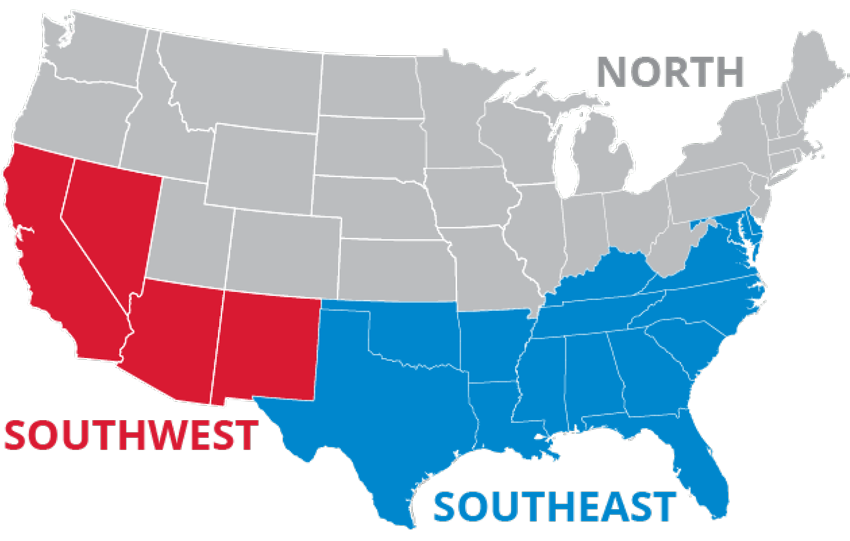
Minimum efficiency requirements in the U.S. reflect climate. Because a furnace runs longer and works harder through a cold winter, the minimum AFUE allowed is higher in northern states than in the warmer regions to the south:
- North: 90% AFUE minimum
- Southeast: 80% AFUE minimum
- Southwest: 80% AFUE minimum
Modern furnaces span that whole range, from 80% AFUE up to a very efficient 98%+, and the Goldbaum's Air Conditioning & Heating team can help you find the right furnace for your home. Depending on how much you run your system, a higher rating can significantly lower your gas bill. Here's how the two main efficiency levels compare:
Single-Stage vs. Two-Stage vs. Modulating Gas Valves
If you're considering a full furnace replacement, you'll want to better understand your options and their associated costs. Often the options fluctuate between upfront costs vs. long-term savings and performance.
In furnaces, the gas valve controls how much fuel reaches the burners and this, in turn, directly affects how evenly your home heats and how often the system cycles on and off. Here is a brief description of each type:
| Valve Type | How It Works Single-Stage |
|---|---|
| Gas Valves | This valve works like a basic light switch: it is either fully on or completely off. When your home gets cold, the furnace fires at full capacity until the thermostat is satisfied. It is dependable and affordable upfront, but it can leave minor room-to-room hot or cold spots. |
| Two-Stage Gas Valves | This valve has two settings: a low stage (around 65% capacity) for mild days and a high stage (100% capacity) for severe cold. The furnace runs on its quieter low stage for roughly 80% of the winter, which saves fuel and keeps warmth steady. It is a popular mid-range upgrade that improves comfort without the top-tier price. |
| Modulating Gas Valves | Instead of stepping between fixed stages, a modulating valve continuously adjusts fuel flow in small increments (between 40% and 100% capacity). It works like cruise control for your heat, matching your home's heat loss to hold temperatures very precisely. It is the premium option, delivering the most even comfort and the quietest operation. |
Comparison of Gas Furnace vs. Heat Pump
If you are weighing your heating options, here is how a gas furnace stacks up against an electric heat pump across the factors that matter most.
Gas Furnace
- How it heats: Burns natural gas or propane to create brand-new heat.
- Best climate: A strong choice for cold regions, delivering steady high-temperature heat through deep winter.
- Air temperature: Delivers hot air (around 120°F to 140°F) for fast, noticeable warmth.
- Heating & cooling: Dedicated to powerful, fast heating, and pairs with a central air conditioner for whole-home cooling.
- Efficiency & cost: Gas is often cheaper to run than electric heat in cold weather, and the furnace delivers full heat output no matter how low the temperature drops.
- Typical lifespan: 15 to 20 years with regular maintenance.
Heat Pump
- How it heats: Uses electricity to move existing heat from the outdoor air into your home, so there is no combustion, flame, or exhaust involved.
- Best climate: Most efficient in mild to moderate climates, or paired with a furnace as a dual-fuel system where winters are harsh.
- Air temperature: Delivers cooler, steady air over longer run cycles instead of short blasts of hot air.
- Heating & cooling: Handles both heating and cooling in a single system, with no separate air conditioner needed.
- Efficiency & cost: Very efficient in milder weather since it moves heat instead of burning fuel, though output drops and costs climb in extreme cold.
- Typical lifespan: Around 15 years with regular maintenance.
Does a Gas Furnace Fit Your Home?
A gas furnace is a dependable standard for residential heating, but it is not the right fit for every home. Because it relies on fuel combustion, it needs specific infrastructure to run safely, and it suits homeowners with certain comfort priorities:
- Access to a fuel line: Your home must be connected to a municipal natural gas line, or set up with an on-site liquid propane (LP) storage tank.
- Dedicated ventilation paths: Standard 80% furnaces vent vertically through a traditional metal chimney pipe up through the roof, while 90%+ high-efficiency models use PVC pipes to vent exhaust out through an exterior sidewall.
- Adequate safety clearances: Furnaces need dedicated breathing room. Building codes require strict clearances around the cabinet to keep flammable materials away from the combustion area and to give technicians room for seasonal checks.
- Central ductwork: This system is built for ducted homes. It sits out of sight in a basement, utility closet, attic, or crawlspace while distributing warm air evenly to every room.
- A preference for rapid warmth: Ideal for homeowners who want high-temperature air (around 120°F to 140°F) coming out of the supply registers the moment the system fires up.
In addition to these considerations, you may be wondering what size furnace do you need? Furnace heating output is measured in BTUs (British Thermal Units), and bigger is not necessarily better. A furnace that is oversized short-cycles, switching on and off rapidly. That wears parts out faster and leaves uneven warm and cold spots from room to room. A furnace that is undersized runs almost constantly and still struggles to keep up on the coldest days.
Learn More About The Furnace Installation Process
How to Ensure My Furnace Is Properly Sized?
Although your home's square footage can give you a ballpark idea of the furnace size you'll need, a properly-sized furnace depends on many more factors than just the square footage of your home. A proper Manual J load calculation accounts for your insulation levels, the number and type of windows, ceiling height, local climate, and how your ductwork is laid out. This is why an in-home assessment from a qualified technician is the most reliable way to match a furnace to your home.
Frequently Asked Questions About Gas Furnaces
With regular preventative maintenance, a high-quality gas furnace generally lasts between 15 and 20 years. It goes through significant thermal stress, expanding and contracting every time the burners fire up and cool down, so an annual safety inspection is the best way to help it reach the upper end of that range. If your furnace is over 15 years old and needs a major repair like a blower motor or heat exchanger, upgrading is usually the better long-term value.
The heat exchanger is the set of metal tubes or coils that separates the burning gas exhaust from the clean air circulating through your rooms. Over years of heating and cooling, the metal can weaken, crack, or rust through. That is a serious safety hazard, because a crack lets toxic combustion gases, including carbon monoxide, leak into the air your family breathes. If a certified professional finds a cracked heat exchanger during an inspection, building codes require the system to be shut down immediately until it is replaced or the furnace is upgraded.
Inspect your furnace filter every 30 days and replace it at least once every 90 days. If you have pets, allergies, or a large household, you may need to replace it more often. A dirty, dust-clogged filter restricts the system's airflow, which forces the heat exchanger to hold too much heat. That trips a built-in safety sensor called a limit switch, which shuts the burners down early to keep the system from overheating.
Yes. Most modern natural gas furnaces can be modified to run safely on liquid propane (LP) using a manufacturer-approved conversion kit. The kit replaces the internal burner orifices and gas valve springs to handle the higher pressure and energy density of propane. This conversion should always be done by a licensed professional to ensure safe combustion settings and proper venting pressure.
Gas Furnace Product Offering
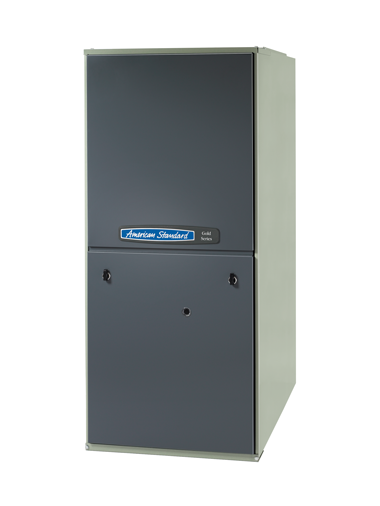
Platinum 95 FurnaceView Brochure |
|---|
| Model Family: Platinum 95 |
| Annual Fuel Utilization Efficiency: Up to 97.3% AFUE |
| Energy Star Certified: ENERGY STAR® |
| Blower Motor: Variable-speed ECM blower motor with Comfort-R™ |
| Gas Valve: Fully Modulating gas valve |
| Inducer Draft Motor: Variable Speed Draft Inducer |
| Fan Heating Operation: Variable speed |
| Factory Warranty Parts: 10 Year limited warranty on internal functional parts |
| Heat Exchanger Warranty: Lifetime limited warranty on heat exchanger |
| Sound Level: Quiet operation |
Manufacturer's Stated Benefits:
|
Gold S9V2-VS Gas FurnaceView Brochure |
|---|
| Model Family: S9V2-VS |
| Annual Fuel Utilization Efficiency: Up to 97% AFUE |
| Energy Star Certified: Energy Star Rated |
| Blower Motor: Variable Speed Blower Motor With Comfort R™ |
| Gas Valve: Two-stage gas valve |
| Inducer Draft Motor: Variable Speed Draft Inducer |
| Fan Heating Operation: Two-Stage Heat |
| Factory Warranty Parts: 10 year Registered Limited Warranty on internal functional parts |
| Heat Exchanger Warranty: Lifetime Registered Limited Warranty on the heat exchanger |
| Sound Level: Quiet operation |
Manufacturer's Stated Benefits:
|
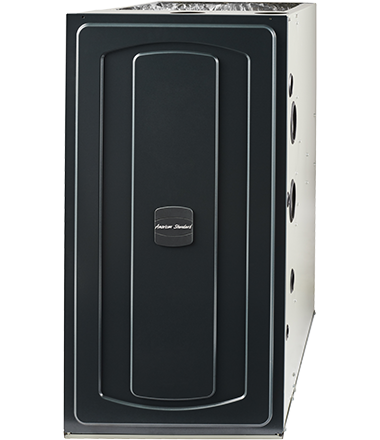
Silver 9X1 Gas FurnaceView Brochure |
|---|
| Model Family: S9X1 |
| Annual Fuel Utilization Efficiency: Up to 96% AFUE |
| Energy Star Certified: Energy Star certification validates performance and efficiency |
| Blower Motor: Constant torque ECM blower motor |
| Gas Valve: Matches with single- and two-stage AC and HP models |
| Inducer Draft Motor: |
| Fan Heating Operation: Matches with single- and two-stage AC and HP models |
| Factory Warranty Parts: 10 Year limited warranty on internal functional parts |
| Heat Exchanger Warranty: Lifetime limited warranty on heat exchanger |
| Sound Level: Quiet operation |
Manufacturer's Stated Benefits:
|
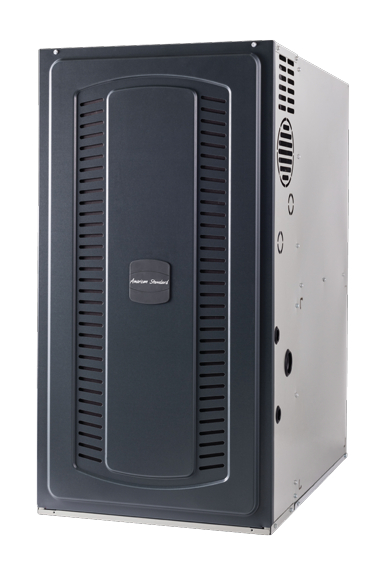
Silver S8X1 Gas FurnaceView Brochure |
|---|
| Model Family: S8X1 |
| Annual Fuel Utilization Efficiency: 80% AFUE |
| Energy Star Certified: No |
| Blower Motor: Multi-speed blower motor |
| Gas Valve: Single-stage gas valve |
| Inducer Draft Motor: High Efficiency Constant Torque ECM Blower Motor |
| Fan Heating Operation: Single stage |
| Factory Warranty Parts: 10-year limited warranty on internal functional parts. |
| Heat Exchanger Warranty: 20-year limited warranty on heat exchanger. |
| Sound Level: Quiet operation |
Manufacturer's Stated Benefits:
|